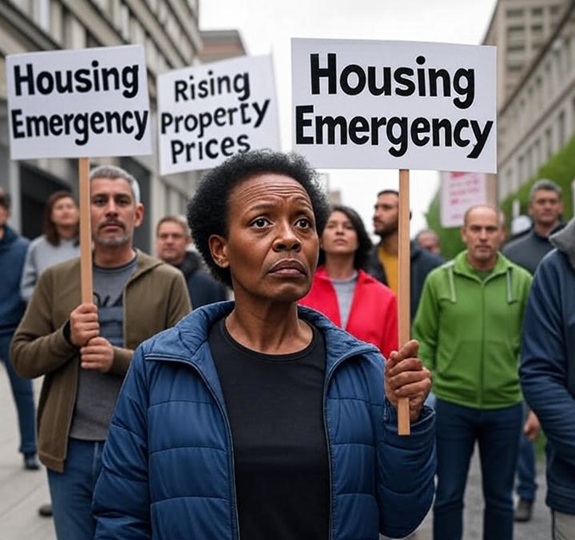

- US Treasury Secretary Bessent claimed President Trump will declare a housing emergency as early as this fall to address rising property prices.
US Treasury Secretary Scott Bessent sounded the alarm on President Donald Trump’s possible declaration of a national housing emergency. He said the decision may arrive in the coming months or as early as fall, depending on circumstances.
Trump’s Housing Emergency Declaration
According to Bessent’s interview with the Washington Examiner, Trump aims to make housing one of his key priorities heading to the 2026 midterm elections. He expects the move to address the skyrocketing property prices following the housing bubble burst during the transition from former President George W. Bush to then-incoming President Barack Obama.
Bessent clarified that the Trump administration is exploring some options to implement its goal of lowering housing prices without encroaching on state or local controls. Its key considerations to address the matter at hand include standardization of zoning codes, lowering closing costs in real estate transactions, and lifting tariffs on construction materials.
Interest Rate Cut Delays ‘Hurting’ the Housing Sector
The latest development comes hot on the heels of Trump’s continuous pressure for Federal Reserve Chair Jerome Powell to lower interest rates by the next Federal Open Market Committee (FOMC) meeting this September. The president claimed that more delays to cut the figures would further hurt the housing industry,
“Could somebody please inform Jerome ‘Too Late’ Powell that he is hurting the Housing Industry, very badly?” Trump ranted on the Truth Social social media platform. “People can’t get a mortgage because of him.”
“There is no Inflation, and every sign is pointing to a major rate cut,” the president emphasized.
Bullish or Bearish Scenario for Crypto?
A national housing emergency could be one of the key factors that would push the Fed’s hand to lower interest rates significantly. This might slightly mirror its past monetary policy at the onset of the national health emergency in response to the COVID-19 pandemic. During that period, the central bank notably dropped the numbers to near zero, coupled with quantitative easing and stimulus packages.
After long-term inflationary implications of these policies became clear, the measure heavily contributed to Bitcoin’s (BTC) steep climb from around $5K to $10K, and to over $64K by the following year. The flight to crypto was mainly fueled by investors seeking to hedge their wealth amid the rapid expansion of the money supply.
Depending on how the Trump administration and the Fed would paint the scenario to the masses, it also could lead to a bearish outcome. If their handling of the situation triggers expectations of a broader economic crisis or liquidity crunch, the ensuing financial contagion could result in de-risking. Market-wide margin calls from leveraged trades due to crypto price volatility would further aggravate things.
However, it should be noted that Trump primarily grounds his incoming housing emergency in making property prices more affordable, not due to an economic crisis. Nevertheless, the event will test Bitcoin’s status as “digital gold” again.
What’s your Reaction?
+1
0
+1
0

+1
0

+1
0

+1
1

+1
0

+1
0