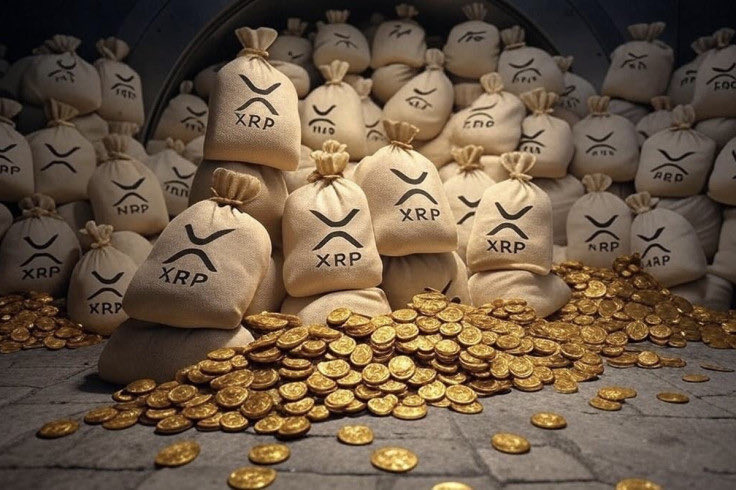

- Experts predict most financial apps will soon run on Ripple’s XRPL, enabling instant, low-cost, cross-border transactions.
- Ripple, Circle, and PayPal are betting big on stablecoins, building the backbone for a new digital finance economy.
- New technologies like Flare’s chain abstraction and Near’s “near-intent” are turning blockchain into a chain-agnostic ecosystem.
Blockchain is no longer just a buzzword; it’s the invisible engine powering tomorrow’s economy. Recent discussions among experts paint a picture of a future where digital payments flow as easily as cash from an ATM, all without the average person batting an eye.
At the heart of this shift? Stablecoins and blockchain-based systems promise speed, low costs, and borderless transactions.
Imagine sending money across the globe in seconds, for pennies, no matter which app or bank you’re using. That’s the vision experts shared in a recent deep dive into the topic. Within five years, they predict, most financial apps will run on XRPL blockchain “rails” (the behind-the-scenes tech) that handles the heavy lifting. Users won’t notice the switch. It’ll just feel smoother and faster.
The key ingredient is interoperability— the ability for different blockchains to talk to each other seamlessly. Tools for cross-chain swaps are already making this happen, turning a fragmented digital world into a unified one.
Ripple Laying the Rails for New Digital Finance Economy
Big players are jumping in headfirst. Ripple, Circle, PayPal, and even old-school giants like Western Union are rolling out their own stablecoins—digital dollars pegged to real money for stability.
These aren’t experiments; they’re bets on a digital economy where assets zip across networks without hiccups. The focus is on the basics: instant transfers, rock-bottom fees, and scalability to handle billions of users. As one analyst put it, “Money should move like email, not like wiring cash in the 90s.”
But it’s not just payments. Investors are piling in, too. Institutional cash is flooding Bitcoin exchange-traded funds (ETFs), outpacing flows into blue-chip stock funds like the NASDAQ’s QQQ. Firms like Panta Capital are loading up on tokens such as XRP, signaling a new era of “digital asset treasuries.”
Companies are now treating crypto assets like corporate reserves, boosting their value per share by holding Bitcoin or Ethereum on the books. It’s a sign that Wall Street sees blockchain not as a gamble, but as the next asset class.
Innovation is Fueling the Fire
Protocols like Near’s “near-intent” and Flare’s chain abstraction are game-changers. Soon, you might just say, “Send $100 to my friend in Europe,” and the blockchain handles the rest, finding the cheapest route across chains, executing it flawlessly.
This push toward “chain-agnostic” systems ditches the “my blockchain is best” mindset for something practical: utility, speed, and savings.
As blockchain weaves deeper into daily life, the message is clear: The revolution is here, and it’s quieter than you think. From stablecoin surges to institutional buys, finance is going digital, one seamless swap at a time. The question isn’t if, but how fast we’ll all catch up.
What’s your Reaction?
+1
1
+1
0

+1
1

+1
0
+1
0

+1
0

+1
0