

- SEC approves a massive expansion of IBIT options limits, raising caps from 250,000 to 1,000,000 contracts.
- BlackRock’s Bitcoin ETF has outgrown its regulatory constraints, with rising volume and open interest pushing the SEC to shift more Bitcoin derivatives activity onto regulated exchanges.
- Despite the bullish regulatory win, Bitcoin’s chart remains fragile, with key support at $83K–$85K and a bearish flip below the yearly open.
In a clear sign that BlackRock’s iShares Bitcoin Trust (IBIT) has outgrown its original regulatory guardrails, the U.S. Securities and Exchange Commission late Tuesday published a Nasdaq ISE proposal that would dramatically raise position and exercise limits on IBIT options, from 250,000 contracts to a whopping 1,000,000 contracts.
Even more significantly, the filing would remove all limits on physically settled FLEX IBIT options, effectively giving large institutions unlimited capacity to hedge or speculate using customized on-exchange contracts.
From 250,000 to 1 Million–Why the Jump Matters
Regulators rarely quadruple position limits unless the existing caps are actively bottlenecking real institutional flow. Sources familiar with the process note the SEC and exchanges only entertain such hikes when trading volume and open interest consistently press against the ceiling, a threshold IBIT has apparently blown past in its first year.
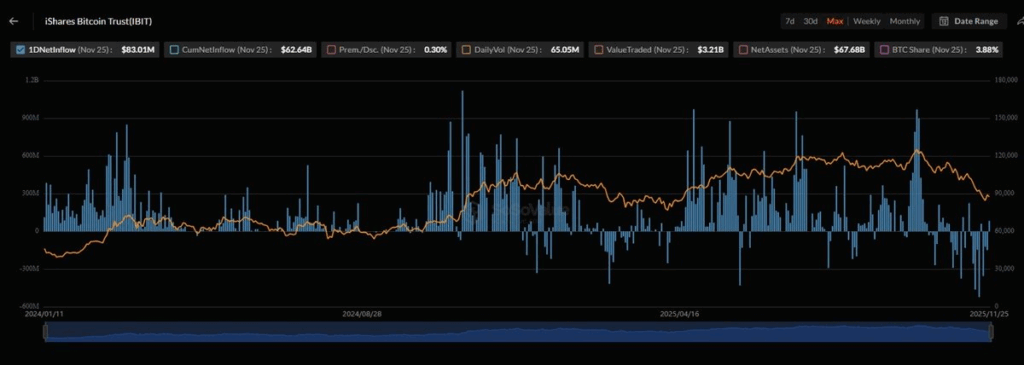
The 4X increase in standard limits and the complete removal of FLEX caps reveal surging demand for Bitcoin exposure through the spot ETF wrapper. This demand is mainly coming from hedge funds, market makers, and prop trading firms.
By widening regulated capacity, the SEC and Nasdaq ISE are deliberately steering institutional hedging and structured-product activity away from opaque over-the-counter derivatives and onto a transparent, centrally cleared venue. Analysts view this as a long-term victory for price discovery and systemic stability in the crypto options ecosystem.
Nevertheless, larger position limits cut both ways. While they enable bigger long hedges and income-generating strategies (covered calls, cash-secured puts), they also permit significantly larger short positioning.
Traders caution that the rule change could amplify volatility around macro events, options expiries, or ETF creation/redemption flows in the near term.
Bitcoin Technical Picture Remains Precarious
Despite the bullish regulatory tailwind for IBIT, Bitcoin’s price action tells a more cautious story. BTC’s recent break and close below the 2025 yearly open ($94,200) flipped the intermediate trend bearish for the first time since early this year.
Market technicians now highlight a critical “defensive zone” between roughly $83,000 and $85,000, an area that coincides with prior breakout levels and heavy on-chain accumulation in recent months. Strong buying interest must emerge here to halt the slide; failure to hold this range could accelerate selling toward the next major support near $70K–$74K.
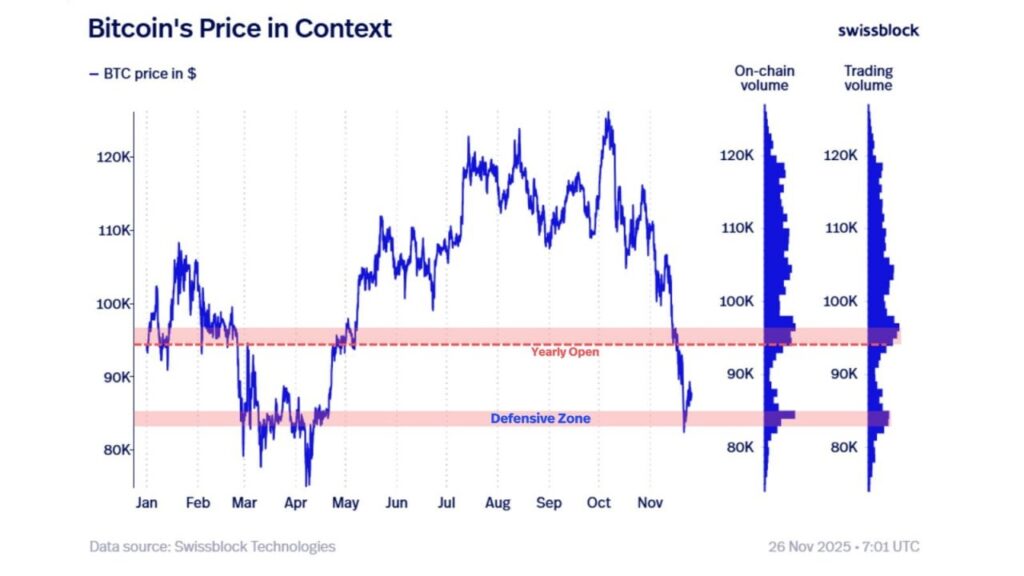
A sustainable trend reversal would require Bitcoin to reclaim and hold above $94,000–$95,000 on a weekly closing basis.
The SEC’s embrace of million-contract IBIT options is unambiguous evidence that Bitcoin has graduated from speculative sideshow to core macro asset in the eyes of U.S. regulators and institutions. Structurally, the development is one of the most bullish regulatory milestones since the spot ETFs launched.
Yet with price trading below the yearly anchor and a key support test looming, near-term traders are right to remain defensive. For Bitcoin to resume its uptrend, the market still needs to prove it can defend lower levels, preferably with the new options firepower deployed on the bid rather than the offer.
What’s your Reaction?
+1
1

+1
0

+1
0

+1
0

+1
0

+1
0

+1
0