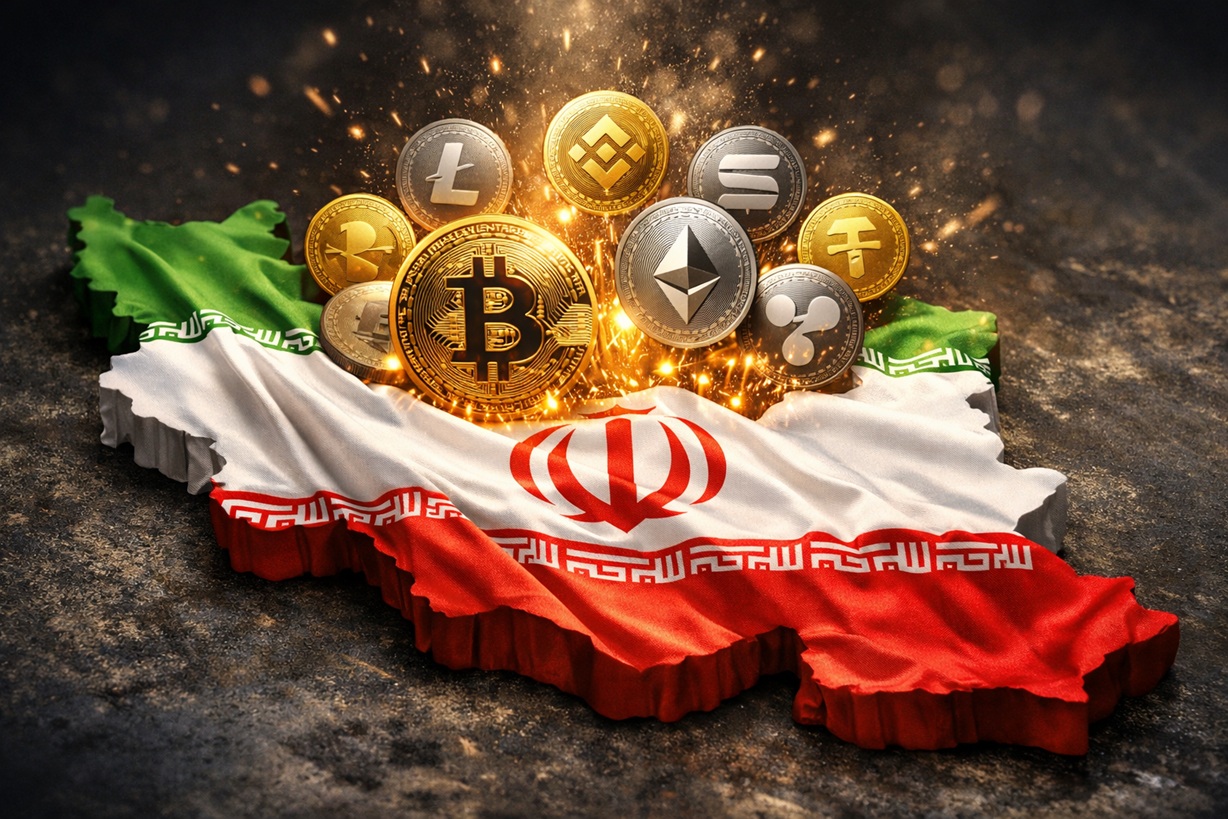

- Iran’s Ministry of Defence Export Center has officially announced accepting crypto payments in weapons, vehicles, and other military hardware sales.
- The move confirms the suspicions of the US and its allies that the hostile nation has been using digital assets to evade sanctions.
- Analysts fear that the nation’s confirmation could spark tighter crypto regulations in the future.
Over the years, the US and the rest of the Western superpowers have weaponized economic sanctions against nations they deemed hostile or not aligned with their goals. In payments, they leveraged the SWIFT international messaging network to exert the dominance of the US dollar and disconnect targeted economies from the global financial grid.
Iran has one of the longest-running sanctions, going back even before the Cold War. Since the 1979 Iranian Revolution, the US has been implementing sanctions in the Middle Eastern nation, lifting them in some years and then reimposing them again due to its non-compliance with bilateral or multilateral terms.
Iran’s Ministry of Defence Export Center Accepting Crypto
With the advent of cryptocurrencies, Iran has found a way to circumvent these strict Western-influenced sanctions. Although the US and its allies have long suspected the country of using these digital assets to navigate through international economic restrictions, it’s only recently that it has announced its intention to accept them as payment for weapons contracts. None other than the nation’s Ministry of Defence Export Center (Mindex) has confirmed the matter.
According to the Financial Times, the state-run overseas defense seller has clients in 35 countries. Its top products include firearms, ammunition, missiles, and rockets. The entity also sells military vehicles and equipment, such as boats and aircraft.
The organization’s website states that it primarily accepts cash or the currencies specified in its agreement with the buyer. Alternatively, it operates on a credit-based contract or through barter. The new method involves any crypto agreed in the contract of sale.
Despite the tight international sanctions, Mindex assures clients that it has no problems fulfilling its contractual obligations. Additionally, it guarantees that their orders will reach them “as soon as possible.”
What This Means for Crypto
Iran’s official admission underscores the true decentralized and democratized nature of crypto. Its permissionless model does not subscribe to the political or social affiliations of its users.
Moreover, the move highlights crypto’s resistance to censorship. Hence, it could serve as a sovereign hedge that nations can use to maintain their trade and financial autonomy even when disconnected from the global banking and payments grid.
However, many fear that the scenario could trigger more burdensome international regulations for crypto. It could justify lawmakers’ anti-crypto sentiment, allowing them to capitalize on the situation to introduce aggressive crackdowns, add pressure on crypto issuers, strengthen AML (Anti-Money Laundering) and KYC (Know Your Customer) rules, and accelerate the Crypto Travel Rule enforcement.
What’s your Reaction?
+1
0

+1
0

+1
0

+1
0

+1
0

+1
0

+1
0